

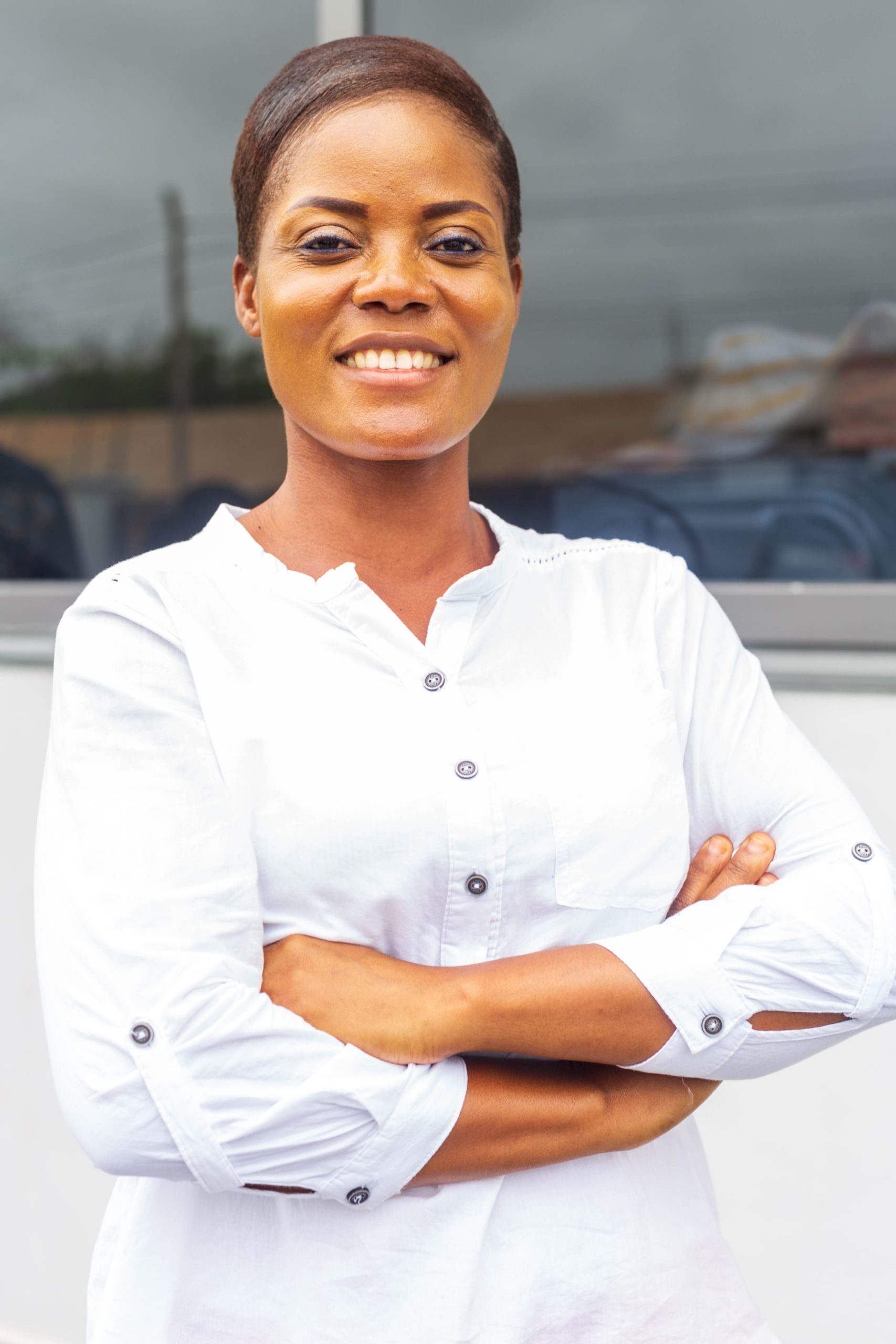
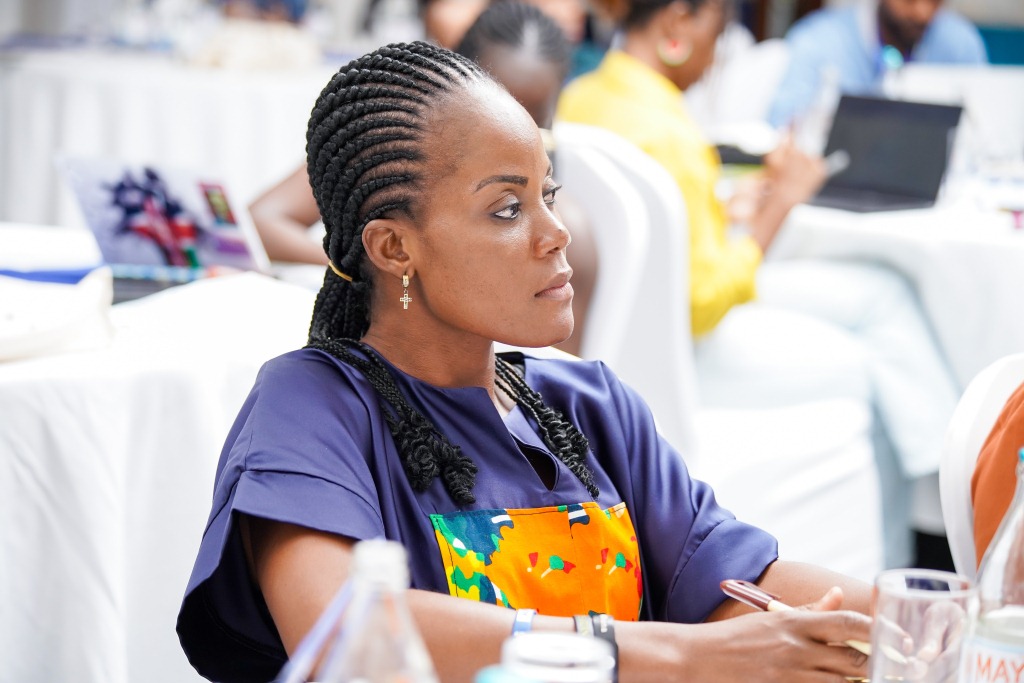
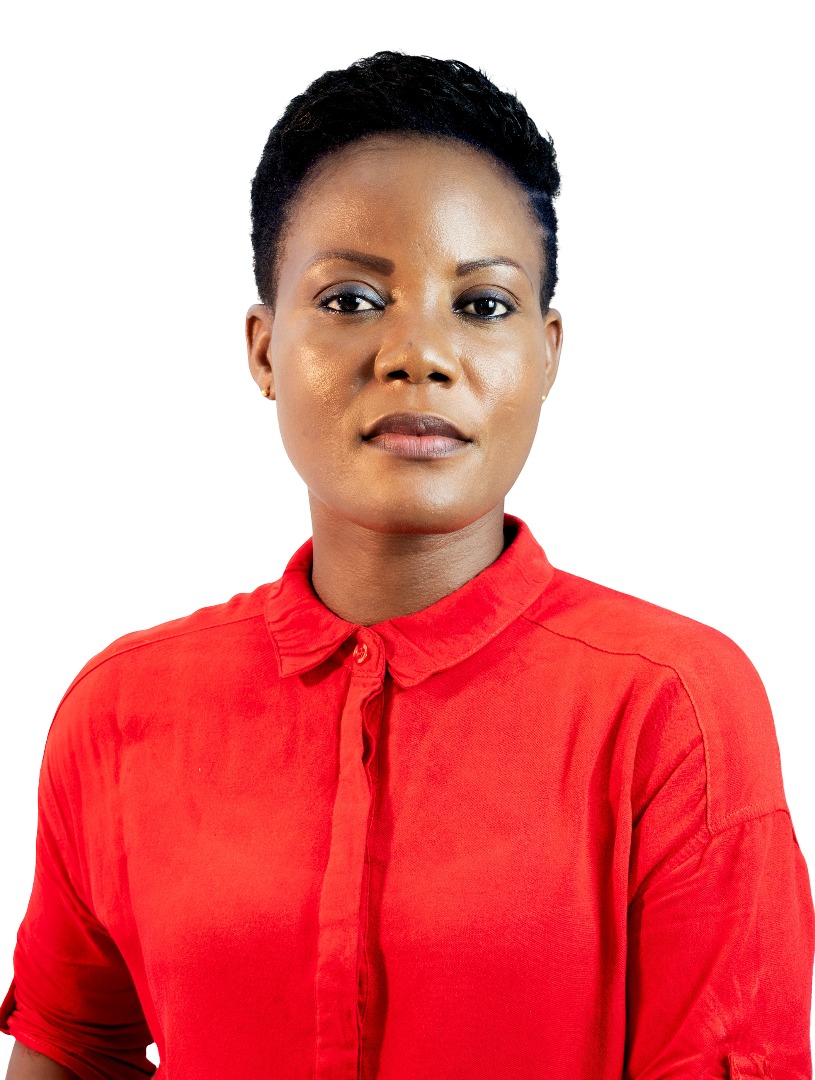
Rebekah Awuah is a celebrated Media for Development professional and documentary specialist, marking her 20th anniversary in the industry this year. Her career is defined by a steadfast commitment to using communication, film, and multimedia as tools for social change. Starting as an intern at Ghana Television (GTV) in 2006, she spent 17 years mastering the craft of visual storytelling within a major national institution. Her work, however, extends far beyond traditional broadcasting. Awuah operates at the critical intersection of media, human rights, and development. She excels at crafting compelling narratives that foster empathy, challenge social norms, and amplify voices from the margins. This focus led her to a pivotal role at the Media Foundation for West Africa, the region’s foremost advocate for media development and freedom of expression. Her two decades of work stand as a testament to the power of journalism to not only inform, but to build a more just and empathetic society.
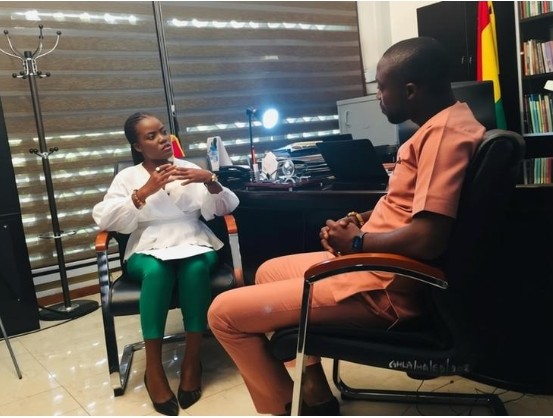
Rebekah who is well respected in Ghana’s media space speaks to Sunday Oyinloye, Publisher Green Savannah Diplomatic Cable about her 20 years journey in the media industry
Excerpts:
You are one of the most respected Journalists in Ghana, but you built your foundation in Theatre Arts, how were you able to achieve that feat?
You are correct. I studied Theatre Arts. Theatre and performance taught me about the human condition. At Legon, I was immersed in Dance, Music, and Theatre Arts. And what is a journalist if not a performer of truth? In theatre, you learn empathy; you learn to inhabit someone else’s reality to tell their story authentically. That is exactly what I do in investigative journalism. When I go into a community to document the struggles of a farmer or a young girl at risk, I am not an outsider taking notes. I am using those performing arts skills—observation, timing, narrative structure to step into their world. In fact, my final year project was a documentary. I won the best documentary student award. So, I never left the arts; I just took the tools from the stage and applied them to the real world, which is the biggest stage of all.
You were in the employment of GBC and GTV for more than 17 years; would you like to share your experience?
GTV was my university after Legon. Seventeen years is a long time, but it was foundational. Working at the state broadcaster gave me a bird’s-eye view of this country. I started in arts and entertainment reporting—covering our culture, our tourism, our creative industry. That taught me to celebrate Ghana. But soon, I moved into news editing, anchoring, and hosting current affairs. I created a show called the ‘Reporters Round Table’. That was my laboratory. I learned to moderate tough conversations, to hold power to account while staying calm and professional. GTV taught me discipline and institutional knowledge. I learned that journalism is a marathon, not a sprint. By the time I left, I had covered every beat—arts, tourism, environment, health, governance. It gave me the range I needed to move into the deep-end investigative work I do now
You eventually moved to The Fourth Estate and the Media Foundation for West Africa. What motivated that shift from mainstream media to investigative and public interest journalism?
My response to that is simple. I realised that asking the ‘nice’ questions wasn’t enough anymore. At a certain point in your career, you have to ask yourself: ‘Am I just reporting the news, or am I trying to change the trajectory of my country?’ I chose the latter. The Fourth Estate is a haven for accountability journalism. It allows me to do the work that is expensive and time-consuming—the deep dives, the document checks, the undercover work that many commercial newsrooms can’t afford to do because of the pressure for daily headlines. I wanted to move from covering the symptoms of our national problems to investigating the causes. Where is the money going? Why is policy failing? Who is suffering in silence? That is the journalism that can actually shift a nation.
Your documentary ‘Voices of Change’ focused on gender disparities in politics. What was the human story behind that investigation that stuck with you?
You know, people see numbers: ’40 women out of 275 MPs’ . They are just statistics. But when we were filming, we met incredible women—professionals, community leaders, brilliant minds—who had the capacity to lead. And we saw the machinery that works against them. The expensive filing fees, the ridicule on campaign platforms, the cultural mindset that says a woman’s place is not in Parliament. One woman told me, ‘Rebekah, it’s not the elections I fear. It’s the loneliness of being the only woman in the room.’ That stayed with me. We are not just fighting for numbers; we are fighting for the quality of our democracy. When you exclude women, you exclude half the solutions to our problems. ‘Voices of Change’ was our attempt to show Ghana what we are missing by keeping these women out.
Your work has exposed wrongdoing, but it has also given voice to the vulnerable. Can you share a moment where you saw the tangible impact of your reporting on a community or an individual?
There were many moments. But one that comes to mind is my work on environmental issues and agrochemical abuse. We did a documentary on how the excessive use of chemicals in farming was poisoning our soil and the food we eat and how adopting agro ecology as an alternative is useful. After it was aired, it wasn’t just a news story anymore. Forums were held, Farmers started calling radio stations. We saw policy makers beginning to ask questions about regulation. Months later, a young farmer walked up to me in a rural area and said, ‘Since your documentary, we’ve started learning about organic methods. My soil is healthier.’ That is the cycle. We shine the light, and people find their own power to change. That is why I do this. It’s not for awards; it’s for that farmer.
You are also the first Ghanaian journalist to be appointed to the jury of the UNESCO/Guillermo Cano World Press Freedom Prize. What does this mean for you and for Ghana?
Honestly, when I received the news, I felt a deep sense of responsibility, not just pride.The prize is named after Guillermo Cano, a Colombian journalist who was assassinated for standing up to drug cartels. He paid the ultimate price for press freedom. To sit on that jury means I am now a guardian of that legacy. For me, I said I’d wear this role not as a personal crown, but as a megaphone for every reporter working in the shadows to keep democracy alive. For Ghana, it signals that our country is seen as a beacon of press freedom in West Africa. It means I have the platform to ensure that African narratives and African struggles are not sidelined in the global conversation about media rights. When a journalist is threatened in the region, I can use that platform to advocate.
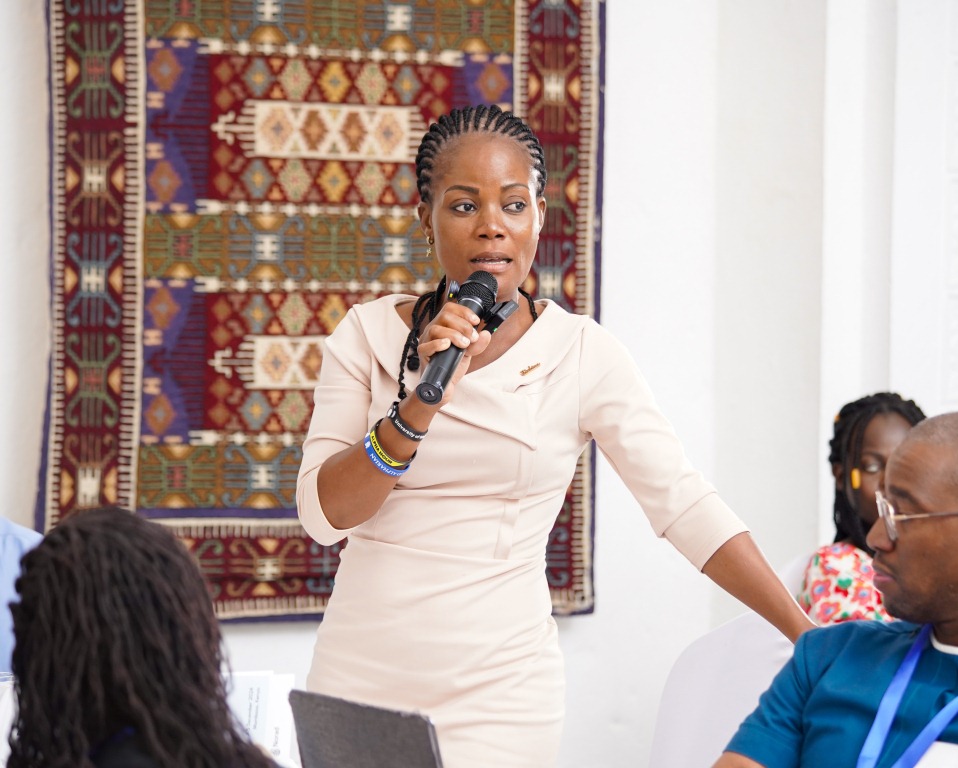
You often say, ‘My name is Rebekah Awuah, and I bring your thoughts alive’. What is the philosophy behind that line?”
That is a very interesting question. It is the core of my being.That line is a covenant with my audience. It means that when I sit in front of you, I am not interested in my own ego. I am interested in translating your thoughts, your fears, your hopes, and your truths to the world. I have personally experienced what it feels like to have your voice ignored or suppressed. It is dehumanizing. So, my job is to ensure that whether I am interviewing a President or a widow in a village, I bring their thoughts to life with the same integrity. It is about service. It is about saying, ‘While you are with me, you will be heard.'”
What are your thoughts on mentorship?
I will describe mentorship as oxygen in journalism. You cannot survive without it.I stood on the shoulders of giants. At GBC, there were seasoned editors who would tear my scripts apart—in a good way—and teach me to rebuild them. They taught me that accuracy is not negotiable. But mentorship also came from unexpected places. Interacting with colleagues at the CNN Africa Journalist Awards in 2013 opened my eyes to global standards. The Mandela Washington Fellowship also shaped my leadership style. That is why I founded the Rebekah Awuah Foundation. We focus on girls and orphans because I know that talent is universal, but opportunity is not. If someone doesn’t reach back to pull you up, the cycle of silence continues. I am committed to breaking that cycle.”
Some young Ghanaians might want to be like you, what advice do you have for them?
Firstly, build your craft relentlessly. Don’t rush to the camera. Learn to write, learn to edit, learn the law. I studied law (LLB) while working because I knew I needed to understand the legal frameworks to report accurately. Secondly, find your ‘why’. If you are doing this for fame, you will quit when the insults come. And they will come. If you are doing it for impact, you will persist through the threats.
What is your impression of the media in your country?
There is an increase in the rate of misinformation. I am also worried about the economic sustainability of quality journalism.. Many young people in the media space today cannot distinguish between a fact and an opinion. It is that bad. There is also the challenge of attacks on journalists, especially female journalists who face online bullying and smear campaigns. What gives me hope is the resilience of the next generation. I meet young journalists who are fact-checkers, who are data-driven, who refuse to be bribed. Organizations like the MFWA and The Fourth Estate are proving that integrity-based journalism can survive.
Looking at the story of your life, what legacy do you intend to leave behind?
I want the young girls in my foundation to look back and say, ‘because Rebekah stood; I could sit at the table. I want to be remembered as someone who used her pen and camera not to build walls, but to open doors for the voiceless. And for my country,, I hope I leave behind a tradition of journalism that is fearless but fair. I believe a life lived for self goes to the grave with you, but a life lived for community creates an impact long after you are gone.