

By Sunday Oyinloye
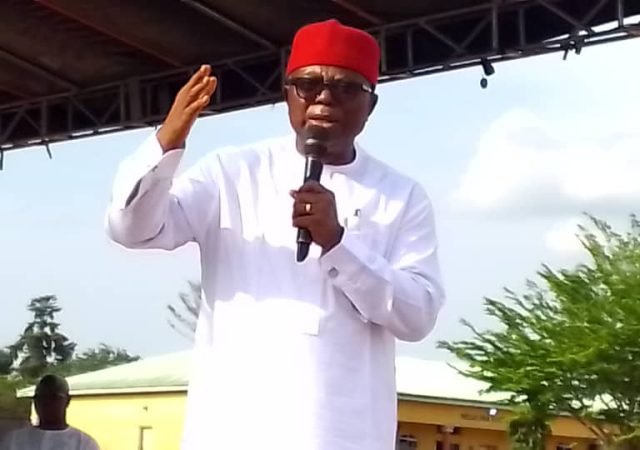
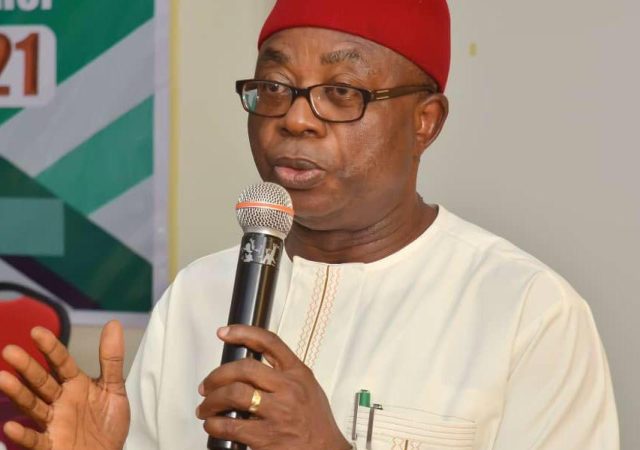
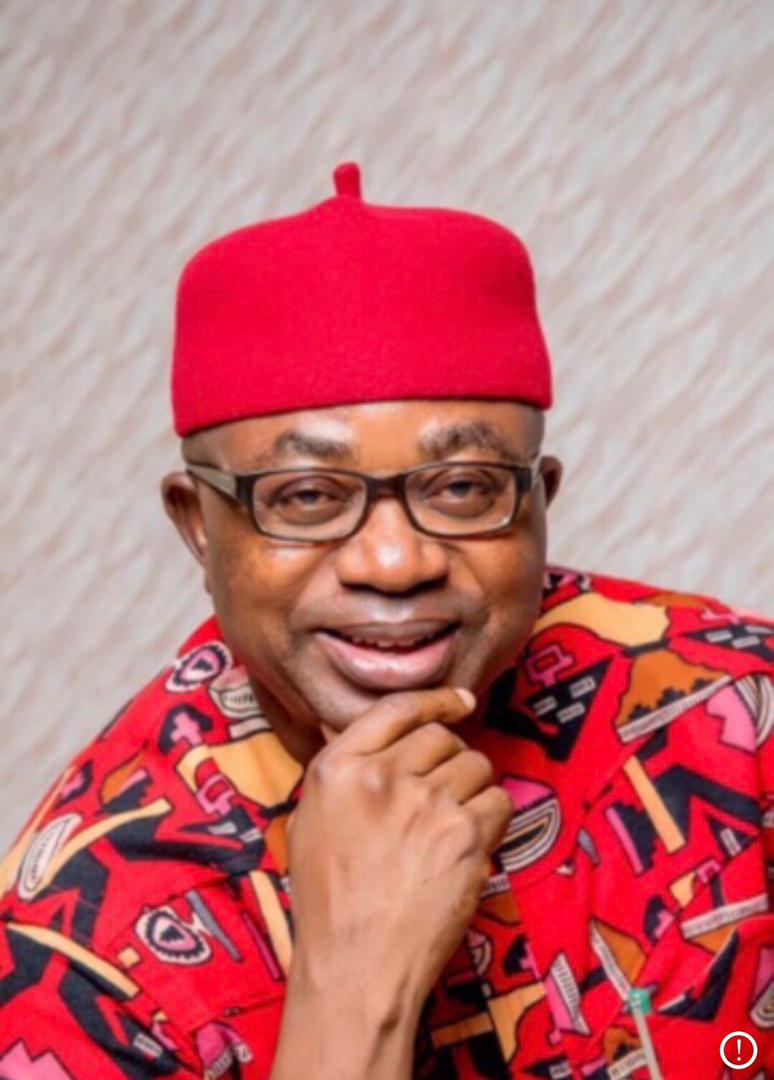
Former member of the House of Representatives and President of GLOBE Legislators, Rt. Hon. Sam Onuigbo, has urged global investors to take advantage of Nigeria’s vast climate investment opportunities, describing the country as a strategic gateway to Africa’s emerging green economy.
Speaking at the inaugural Nigeria Climate Investment Summit (NCIS) held at Mansion House in the City of London during the London Climate Action Week 2026, Onuigbo said Nigeria’s climate transition presents enormous opportunities across renewable energy, sustainable agriculture, transportation, carbon markets, clean cooking, infrastructure and environmental remediation.
The summit, organised by GLOBE Legislators in partnership with SOStainability, brought together policymakers, investors, development partners and climate experts to explore pathways for mobilising sustainable investments into Nigeria.
According to Onuigbo, Nigeria’s position as Africa’s most populous country, coupled with the opportunities created by the African Continental Free Trade Area (AfCFTA), makes the country an attractive destination for climate-related investments.
He noted that the AfCFTA provides access to a market of more than 1.3 billion people with a combined Gross Domestic Product exceeding $3.4 trillion, adding that investments made in Nigeria have the potential to serve the wider African market.
“Climate investments in Nigeria should not be viewed merely as investments in a 230-million-person market. They should be seen as investments positioned to access a significant proportion of Africa’s 1.3 billion population and a potential market of about 2.5 billion people by 2050,” he said.
Onuigbo cited strong investor confidence in Nigeria’s green finance sector, noting that the Federal Government’s 2025 Sovereign Green Bond worth N50 billion attracted subscriptions of N91 billion, exceeding its target by 82 per cent. He added that Lagos State’s Green Bond was oversubscribed by nearly 98 per cent.
Highlighting the country’s energy deficit, he said more than 90 million Nigerians currently lack access to electricity, making Nigeria home to the largest population without electricity access globally.
While Africa possesses approximately 60 per cent of the world’s best solar resources, the continent accounts for less than one per cent of installed solar generation capacity, he said, describing the gap as one of the largest renewable energy investment opportunities in the world.
The former lawmaker commended President Bola Tinubu for policies aimed at promoting green investments, including the removal of fuel subsidy, implementation of the Presidential Compressed Natural Gas Initiative, expansion of electric vehicle adoption, establishment of a National Carbon Market Framework and the operationalisation of the Climate Change Fund.
He also pointed to Nigeria’s updated Nationally Determined Contributions (NDC 3.0), submitted in 2025, which target net-zero emissions by 2060 and require an estimated investment of nearly $350 billion.
According to him, a substantial portion of the required financing is expected to come from international investors, development partners and private capital.
“The National Carbon Market Framework alone is projected to unlock between $2.5 billion and $3 billion annually in carbon finance over the next decade,” he stated.
Onuigbo, who sponsored Nigeria’s Climate Change Act 2021, said the legislation established the country’s first comprehensive legal framework for climate action and led to the creation of the National Council on Climate Change.
He explained that climate investments are increasingly critical as climate-related impacts such as desertification, drought, coastal erosion, flooding and pollution continue to threaten economic growth and livelihoods across the country.
The summit convener identified the electricity sector as one of the most promising areas for investment following the enactment of the Electricity Act 2023, which allows states to independently regulate electricity markets and develop power projects.
He disclosed that 15 states have already assumed regulatory control of their intra-state electricity markets, creating new opportunities for renewable energy developers and investors in mini-grid and off-grid solutions.
Onuigbo also highlighted opportunities in climate-smart agriculture, noting that agriculture contributes about 24 per cent of Nigeria’s GDP but remains vulnerable to climate change.
He further identified electric mobility, clean cooking technologies, carbon credit projects, afforestation, biodiversity conservation, gas flare commercialisation and environmental remediation in the Niger Delta as sectors with significant investment potential.
Speaking on Nigeria’s Energy Transition Plan, he said the country aims to achieve net-zero emissions by 2060 while expanding energy access, creating jobs and promoting industrialisation. The plan projects investment opportunities worth approximately $1.9 trillion over the coming decades.
He also referenced the proposed Nigeria Evergreen City project in Nasarawa State, a green industrial zone expected to leverage the state’s lithium resources to support battery manufacturing, renewable energy technologies and climate adaptation solutions.
Despite Africa’s abundance of critical minerals needed for the global energy transition, Onuigbo expressed concern that the continent currently attracts only about two per cent of global renewable energy investment.
He said the Nigeria Climate Investment Summit was conceived to help reverse the trend by connecting investors with opportunities across Nigeria and the broader African continent.
Drawing parallels with Nigeria’s telecommunications revolution, Onuigbo recalled that many foreign investors initially overlooked opportunities in the sector after its liberalisation more than two decades ago.
Those who eventually invested, he noted, built some of Africa’s largest and most successful companies.
“Today, the same opportunity has presented itself in the green investment corridor. May the mistakes of the past not be repeated,” he said.
He expressed optimism that discussions at the summit would accelerate investment flows into Nigeria’s climate sector and support the country’s transition to a sustainable, low-carbon economy.