

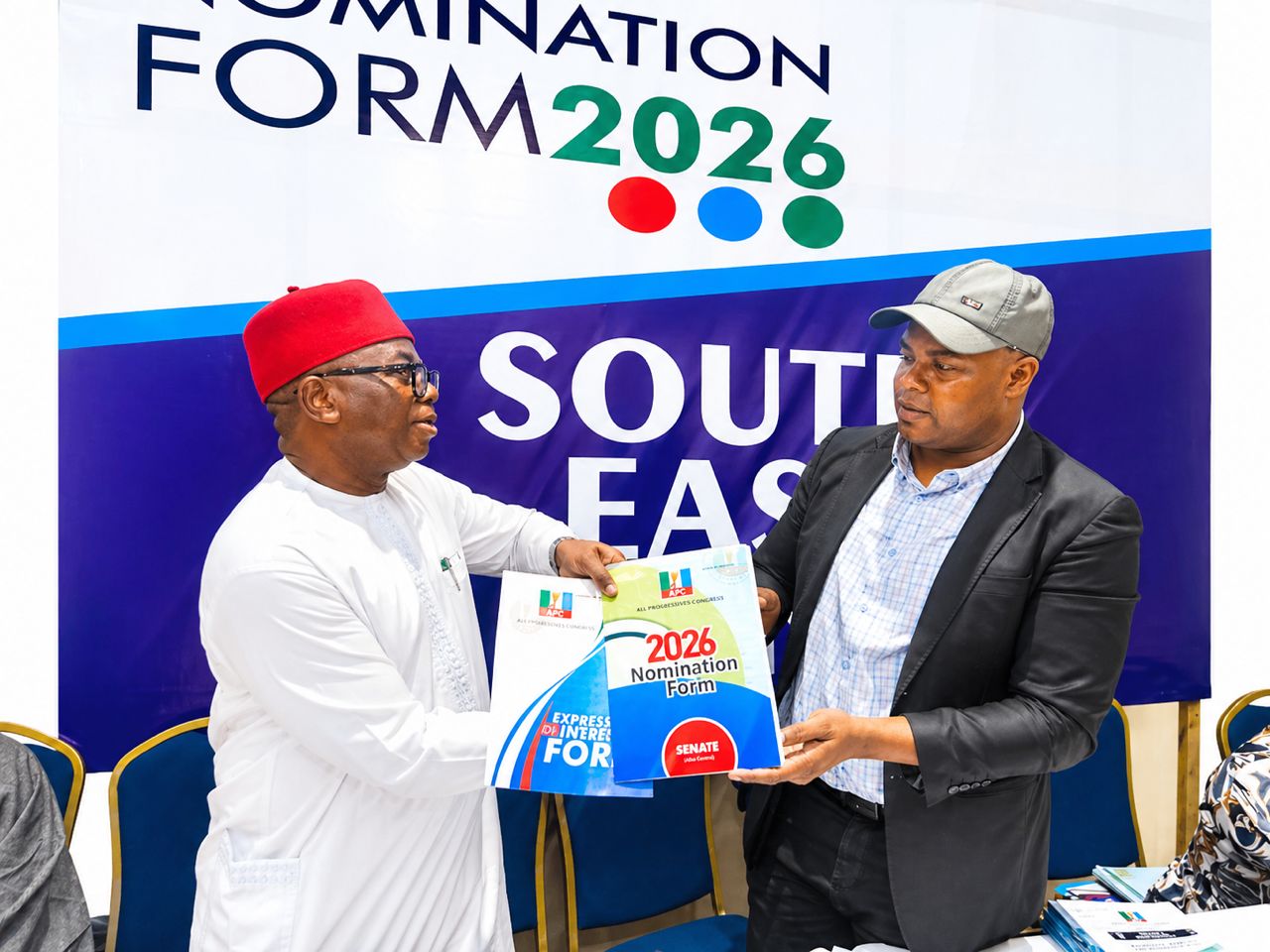
By Mephy James
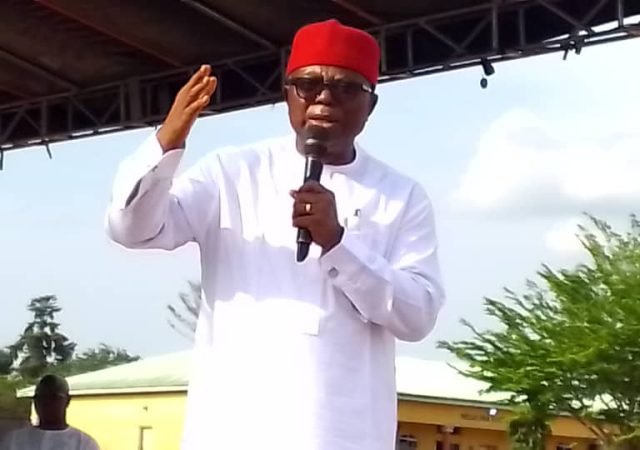
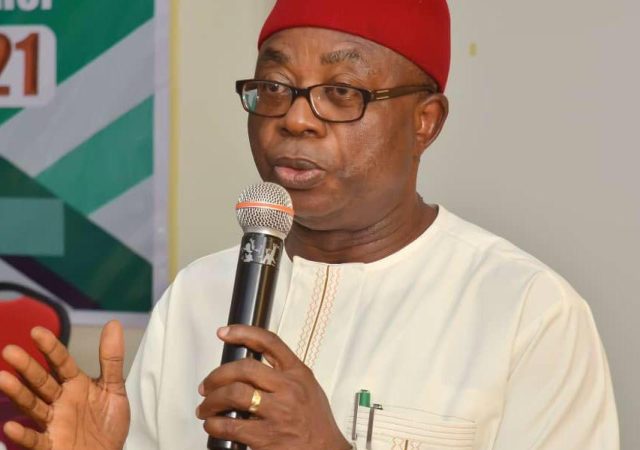
Aspirant for the Abia Central Senatorial Seat, Rt.Hon. Sam Onuigbo, has formally declared his intent to contest after purchasing the All Progressives Congress (APC) expression of interest and nomination forms for the 2027 general elections.
Onuigbo, who represented Ikwuano/Umuahia North/Umuahia South Federal Constituency in the House of Representative between 2015 and 2023, said his decision to seek election into the Senate is grounded in his record of legislative service, which he described as consistent, people-oriented, and impactful.
During his tenure in the Green Chamber, he was widely regarded as an active participant in legislative proceedings, with regular contributions on the floor of the House and involvement in the passage of bills and motions.
Observers note that his approach to lawmaking reflected sustained engagement rather than passive attendance, a quality his supporters now highlight as a key strength in his Senate bid.
Beyond his activities at the National Assembly, Onuigbo maintained a visible presence in his constituency throughout his time in office. Constituents recall frequent interactions, community-based initiatives, and interventions aimed at addressing local challenges. This dual focus on legislative duties and constituency outreach, analysts say, has shaped perceptions of his effectiveness as a public servant.
With the purchase of the nomination form, political watchers in Abia Central believe the race has entered a decisive phase, where aspirants will increasingly be scrutinised based on their records, influence within party structures, and ability to mobilize grassroots support.
Supporters of the former lawmaker argue that his track record in legislative oversight and constituency development offers concrete evidence of his readiness for higher responsibility. They maintain that his experience provides continuity and depth, qualities they say are essential for effective representation at the Senate.
In various parts of the senatorial district, there is a growing call among party stakeholders for the primaries to be determined by merit and demonstrable performance. Many insist that candidates should be evaluated on what they have already achieved in public office rather than on promises of future delivery.
According to this school of thought, Onuigbo’s record represents a measurable standard against which other aspirants can be assessed. They point to his sustained legislative engagement, oversight functions, and community impact as indicators of capacity and commitment.
During his tenure in the National Assembly, the former federal lawmaker established a track record defined by active legislative participation, diligent oversight, and impactful constituency projects spanning education, infrastructure, healthcare, and human capital development.
At the parliamentary level, Onuigbo sponsored several motions addressing both national priorities and local concerns. Notably, he called for the urgent reconstruction of the Umuahia–Ikwuano–Ikot Ekpene Federal Road, a vital economic corridor connecting communities in Abia and Akwa Ibom States.
He also pushed for stricter regulation of admissions into tertiary institutions, raising concerns about students being enrolled in programmes not accredited by the National Universities Commission. This move was aimed at safeguarding students and their families from investing in qualifications that lack official recognition.
In another effort, he introduced a motion to address the misuse of Nigeria’s national flag, particularly the incorrect placement of the coat of arms, and took steps toward amending the relevant legislation. He further advocated for the recognition of late Super Eagles coaches, Stephen Keshi and Amodu Shuaibu, following reports that they were owed entitlements at the time of their deaths.
Onuigbo also presented petitions concerning the wrongful dismissal of over 300 employees of a commercial bank, as well as the termination of staff within the National Drug Law Enforcement Agency, advocating for due process and the settlement of outstanding benefits.
He played a key role in resisting a directive to eliminate non-agricultural courses from federal universities of agriculture. Through sustained engagement and consultation, this effort contributed to the reinstatement of affected programmes, including Management Sciences at Michael Okpara University of Agriculture.
Beyond legislation, Onuigbo facilitated the establishment of a Federal Secretariat in Abia State, more than three decades after its creation—marking a significant step in enhancing federal presence and administrative accessibility in the state.
Perhaps his most prominent contribution is the Climate Change Act, a legislative framework he initiated in 2016 to guide Nigeria’s response to environmental challenges. The law embeds climate considerations into national policy and aligns the country with global commitments such as the Paris Agreement.
As Chairman of the House Committee on Climate Change, he was actively involved in both domestic and international initiatives. He contributed to the Ogoni clean-up project and was part of Nigeria’s delegations to global climate conferences in cities like Paris, Marrakech, and Bonn. He also witnessed the signing of the Paris Agreement at the United Nations General Assembly.
Within the committee, he convened numerous sessions with Ministries, Departments, and Agencies to deepen awareness and strengthen funding commitments toward climate action, helping to secure approximately ₦8 billion for related programmes.
At the constituency level, his efforts focused heavily on addressing pressing infrastructure needs. Working closely with the Federal Ministry of Power, Works and Housing, he pushed for the rehabilitation of the deteriorating Umuahia–Ikwuano–Ikot Ekpene Road, securing its inclusion in the federal budget. He also supported plans for an alternative route linking Okwe Oboro, Obuohia, and Nkari, including the design of the Ehie Bridge.
Beyond infrastructure, Onuigbo invested significantly in education and skills development. He provided ongoing scholarship support for students across secondary, undergraduate, and postgraduate levels. In addition, he organized vocational training programmes in areas such as entrepreneurship, auto mechanics, and fish farming, collaborating with institutions like the Kolping Society, the National Automotive Council, and the Federal College of Fisheries and Marine Technology.
His infrastructure interventions also included the construction of classroom blocks in Ekebedi Oboro and Old Umuahia, alongside the establishment of health centres in Oloko and Obuohia Obi Ibere. Key inter-village roads, such as the Akpahia Obi Ohuru road and the Okwe–Obuohia axis, were incorporated into development plans through his efforts.
Onuigbo’s empowerment initiatives extended to agriculture, where over 250 farmers benefited from the distribution of farming inputs. He also facilitated job placements for numerous constituents in both public and private sectors.
In the media sector, he played a role in reviving operations at the Nigerian Television Authority station in Umuahia by providing a power generator and liaising with relevant authorities. Following a fire incident, he donated broadcast equipment to Pacesetter FM and supported the digital upgrade of the Broadcasting Corporation of Abia State.
Access to clean water and electricity also featured prominently in his projects. He facilitated the installation of a solar-powered borehole in Avonkwu Ibeku and supported electrification initiatives in communities such as Usaka Ukwu, Oloko, and Obuohia Obi Ibere.
His environmental interventions addressed erosion challenges, with projects carried out in Amankwo Ezeleke, Amachara in Umuopara (Umuahia South), and Okwe Oboro in Ikwuano. These works, valued at about ₦760 million, complemented other projects like the construction of the Elemaga Itunta mini bridge in Ibere, improving connectivity within the area.
Further contributions include the establishment of a skills acquisition centre at Apumiri Ubakala, aimed at equipping youths and women with practical vocational skills, as well as continued support for educational development at Michael Okpara University of Agriculture.
Rt. Hon. Sam Onuigbo also maintained regular interaction with constituents through meetings and seasonal outreach programmes, providing food supplies and financial assistance during festive periods. In promoting youth engagement, he organized football tournaments in Ibere and Obuohia Obi Ibere, encouraging constructive participation in sports.